EN
EN
 PL
PL
 DE
DE
 SV
SV
 CS
CS
 SK
SK
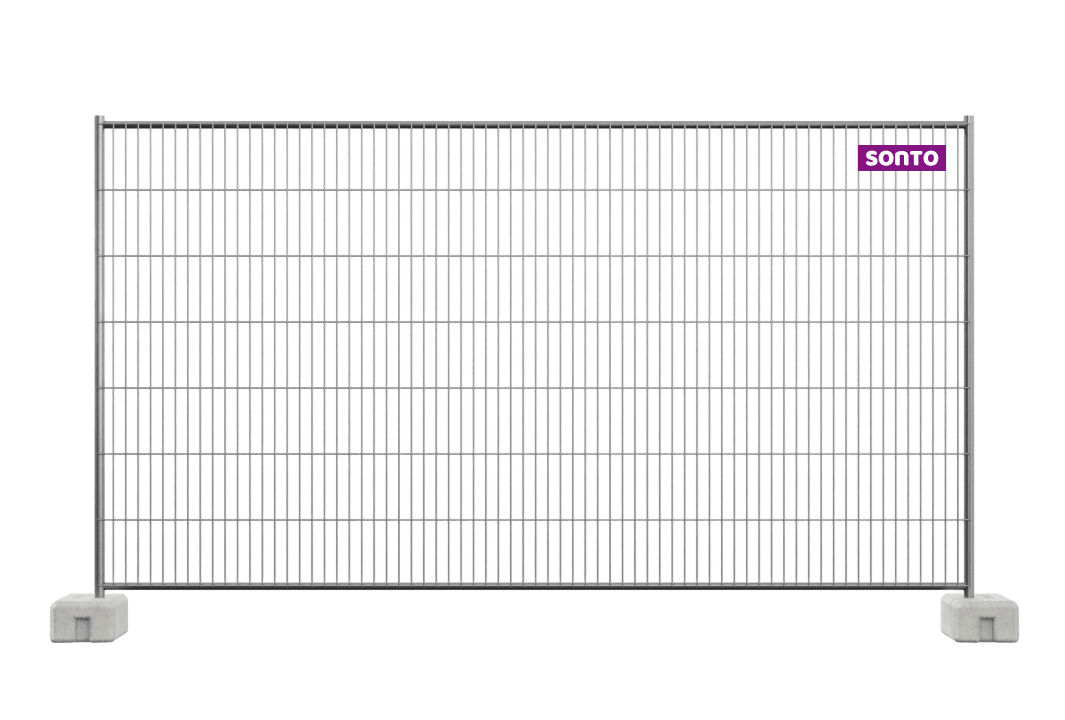
Mesh panel ANTICLIMB
Panel with a dense mesh that deters climbing — for sites with raised security requirements.
Given the wide range of production options, the technical data quoted is indicative.
The ANTICLIMB mesh panel uses a 43 × 262 mm aperture — narrow enough that neither a boot nor a hand fits, which takes away an intruder's holds.
The 3500 × 2000 mm panel weighs 13.6 kg, over three kilograms more than the ECO variant — the mass comes straight from mesh density. The wire is 2.2 × 3.2 mm, with profiles of 38 mm vertically and 25 mm horizontally. The narrow aperture changes what the fence is: from a barrier that marks a boundary into one that has to be genuinely defeated.
How the anti-climb effect works
Ordinary site mesh has apertures large enough to form a ready-made ladder — a toecap and fingers are enough. Tightening the aperture to 43 mm on one axis removes both holds. The fence cannot be crossed without equipment, and that is usually sufficient, because site theft is a crime of opportunity.
- sites holding expensive plant and materials
- infrastructure assets and industrial land
- builds in dense urban settings
- enclosures during a project standstill
What ANTICLIMB does not replace
A dense mesh raises the bar but does not create a security fence in the sense used for guarded assets. Where a genuine barrier is required, the panel is topped with concertina razor wire — coils are fitted on panel brackets or on extension arms.
What this means for installation
Denser mesh presents more area to the wind even without debris netting. With this variant, plan heavier feet and raking stays exactly as you would for a sheeted fence — 13.6 kg of panel is no substitute for ballast in the base.